Introduction
It is unfortunate that a large proportion of world ’s children do not have access to safe drinking water and sanitation. This is in spite of the global recognition for these interventions as crucial determinants of child health and nutrition and, therefore, contributing to preventable morbidities, increased risk of death and malnutrition in children.
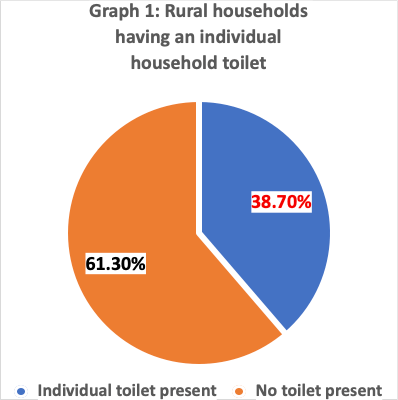
India contributes significantly to the global pool of children without access to drinking water and sanitation facilities. According to the National Family Health Survey 4 (NFHS – 4, 2015-16 page 259), only 36 percent of under five children’s stools were disposed of safely in India, which means the child either used a toilet/latrine or child’s stools were put/rinsed into a toilet/latrine or stools were buried. Similarly, only 38.70% rural households were having an individual household toilet in October 2014 (See Graph 1). 46920 out of about 600,000 (7.82%) villages were open defecation free on 2nd October 2014 while in 2015-16, only 5 districts out of 711 were open defecation free. (See here)
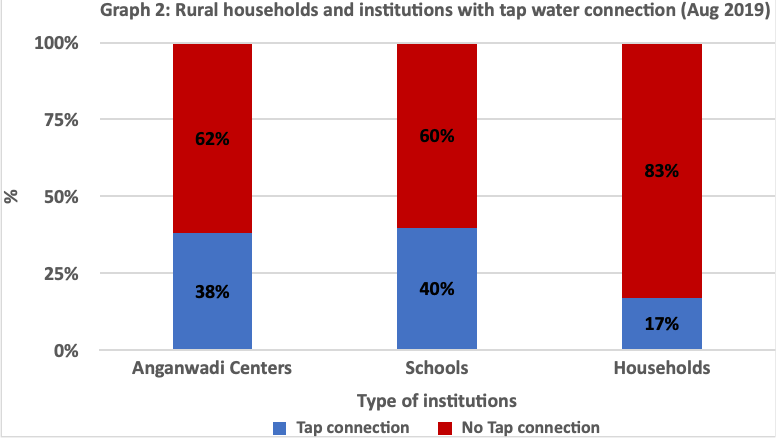
As on 15th August 2019, out of 18,95,52,857 rural households in India, only 3,23,62,838 (17.07%) were having a tap water connection. While, out of 10,30,820 schools in the country, only 408,943 (39.6%) schools and only 428,890 Anganwadi Centres out of 11,28,813 were having tap water connection. (See here) (See Graphs 2)
It is important to note that India houses largest number of malnourished children and also reports highest number of deaths in children under five years of age in the world. In India, 30.9% of children under five are stunted (low height for age) and 18.7% are suffering with wasting (low weight for height). While, 824,000 children under the age of five years die each year in the country. Two-third of these deaths happen during the neonatal period (0-28 days of life), about 300,000 children die between the age of 1 – 59 months. (See here) Infections like diarrhoea remains an important cause of these deaths.
Till the recent past, policies and programmes to address child health and nutrition gave more emphasis to therapeutic interventions to tackle the burden of infectious diseases like diarrhoea; and food supplementation to counter acute and chronic malnutrition, while giving less than adequate attention to provide safe drinking water, toilet facilities and hygienic practices. However, during the last 6-7 years, the Government of India has taken up programmes on sanitation and drinking water on a mission mode. It will be interesting to see how these programmes with renewed strategies add to improve child health and nutrition in the country in the coming periods.
Safe drinking water and proper sanitation are crucial for optimal child health and nutrition
Access to safe drinking water and sanitation has an immense public health importance. Unsafe drinking water and poor sanitation are linked to childhood morbidities like diarrhoea, cholera, dysentery, hepatitis A, enteric fever, poliomyelitis, intestinal worm infestation like ascariasis and hookworm, acute and chronic malnutrition and trachoma.
Diarrhoea: Diarrhoea is an important cause of child deaths globally. According to an estimate, globally, diarrhoea causes 1.5 million child deaths each year, 88% of which is attributable to poor WASH (Water, Sanitation and Hygiene) practices. In India, it accounts for approximately 9 per cent of all deaths among children under age 5 in 2017. Recurrent diarrhoea episodes may cause nutritional deficiencies leading to malnutrition, reduced resistance to infections and sub-optimal growth and development. Fluid loss during an acute diarrhoea episode, if not treated appropriately, may lead to dehydration and death. (See here) Better water, sanitation, and hygiene could prevent deaths of thousands of children aged under 5 years each year.
Stunting: Poor sanitation and unsafe drinking water leading to diarrhoea and other infections are important determinants of Stunting along with food insecurity. A multi-country analysis of the effects of diarrhoea on childhood stunting revealed that 25% of stunting can be attributed to >or=5 diarrhoeal episodes before 24 months of age. A study from Ethiopia which examined association between childhood malnutrition and water, sanitation, and hygiene among children aged 6–59 months found that there was an inverse association between household access to a improved toilet facility and childhood malnutrition. Similarly, an ecological regression analysis from India found that a 10% increase in open defecation was associated with a 0.7 percentage point increase in both stunting and severe stunting. A cross-sectional study from eastern India found that water facility outside the household premise, unimproved sanitation facility and non use of soap after defecation had significant association with poor nutritional status of adolescent girls.
“You really can’t address stunting unless you clean up the sanitary environment. It doesn’t matter how much extra food you try to stick into kids or how much dietary supplements you give them, it will all just go through them.”
Clarissa Brocklehurst, Former Chief of Water, Sanitation and Hygiene for UNICEF, speaking about Indian children
Typhoid fever: Typhoid is a serious, life threatening bacterial infection, endemic in developing countries like India. The organism generally enters the human body through contaminated food or water. The risk of getting the infection is more in population that lacks access to safe water and adequate sanitation. (See here) Primary strategies for preventing typhoid fever include safe water supply, adequate sanitation facilities and proper hygienic practices.
Soil-transmitted helminth infections (STH): STH are transmitted through eggs in human faeces, which contaminate the soil when adequate sanitation facilities are not available. Helminth infections with Round worms, Whip worms and Hook worms infection cause nutritional and physical impairment in children. (See here) In India, 225 million children are estimated to be at risk of STH who require preventive and curative intervention with anti-helminthic drugs.
For girls, inadequate sanitation facilities in the educational institutes bring additional socio-economical risks like decreased school attendance and school drop outs. (See here)
Safe drinking water and adequate sanitation interventions will help India to reduce child mortality and undernutrition
Improved access to safe drinking water and sanitation will help India in several ways:
Reducing child mortality and undernutrition:
India is striving hard to improve the dismal situation of high child mortality and undernutrition with the help of various preventive and curative programmes. However, to make a sustainable change in the situation, there is a need to look into public health and social development interventions like access to safe drinking water, adequate sanitation and hygiene with a health, nutrition and child rights perspective and intensify their implementation. As mentioned-above, there is enough evidence to suggest that safe drinking water and adequate sanitation facility are crucial for reducing the child mortality and child malnutrition.
Achieving the Sustainable Development Goals (SDGs):
Improving access to safe drinking water and adequate sanitation will help the country to achieve the Sustainable Development Goals (SDGs) including SDG 2 (target 2.2 – reducing stunting and wasting in children under 5 years of age); SDG 3 (target 3.2 – reducing neonatal mortality to at least as low as 12 per 1,000 live births and under-5 mortality to at least as low as 25 per 1,000 live births). In SDG 6, target 6.1 asks achieve universal and equitable access to safe and affordable drinking water for all, while SDG target 6.2 requires to achieve access to adequate and equitable sanitation and hygiene for all and end open defecation, paying special attention to the needs of women and girls and those in vulnerable situations by 2030.
Fulfilling obligations to the global human rights recommendations:
India as a country has to fulfil its human rights obligations of providing access to safe drinking water and adequate sanitation to all including children. It is important to note that the UN General Assembly has recognised access to safe drinking water and adequate sanitation as a human right. The Convention on the Rights of the Child (via article 24) mandates that the state parties (Country Governments) provide nutritious food and safe drinking water to children to combat disease and malnutrition. It also asks Governments to provide access to education to parents and children and to support them in the use of basic knowledge of child health and nutrition, the advantages of breastfeeding, hygiene and environmental sanitation.
Progress made so far to improve provision of safe drinking water and sanitation in India
Since India’s independence in 1947, several government initiatives attempted to deliver safe drinking water and sanitation facilities. However, the progress was very slow which was further negated by the ever increasing population. In recent years (since 2014), Government of India has launched national programmes on sanitation and safe drinking water in a mission mode. These programmes are backed by strong political commitment at the highest level and adequate financial allocations.
1. Sanitation
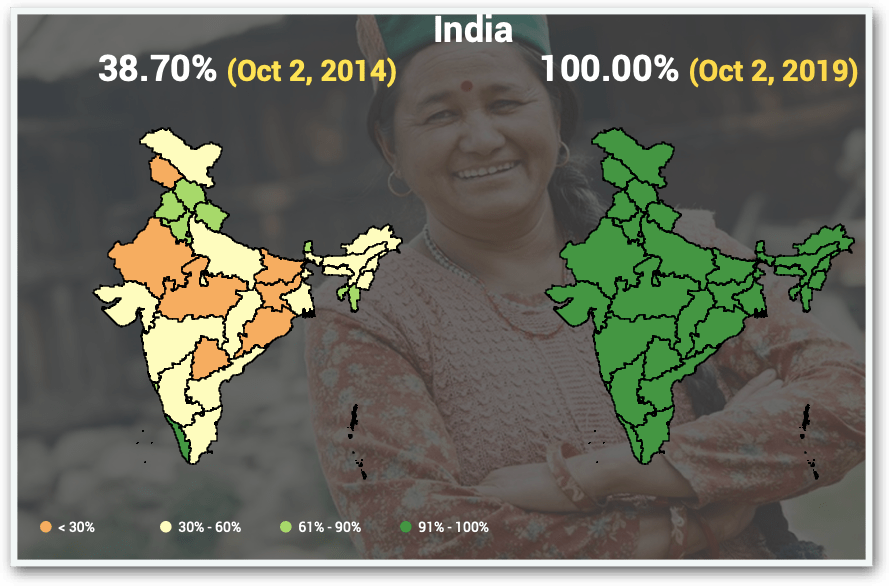
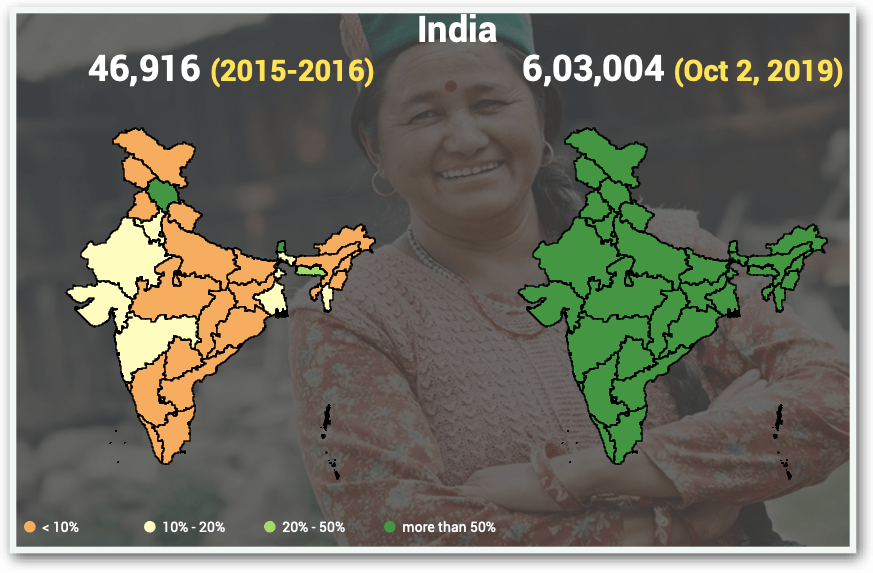
On 2nd October 2014 (Mahatma Gandhi’s Birthday), the Government of India launched the Swachh Bharat Mission (Clean India Mission) in rural and urban areas of the country to achieve universal sanitation coverage in the country. Over 100 Million Individual Household Latrines (IHHL) were constructed in the rural India. While, more than 6 Million such toilets and more than 600,000 community and public toilets were built in the urban areas. By 2nd October 2019 (150th Birthday of Mahatma Gandhi), all 600,000+ villages (100%), all 711 districts and states (including Union Territories) were declared Open Defecation Free. Similarly, 4360 (98%) urban areas were declared open defecation free. This is a big achievement in county’s quest to achieve adequate sanitation services for all its citizens. (See Figures 1-3)
Source: https://sbm.gov.in/sbmdashboard/Default.aspx
Source: https://sbm.gov.in/sbmdashboard/Default.aspx
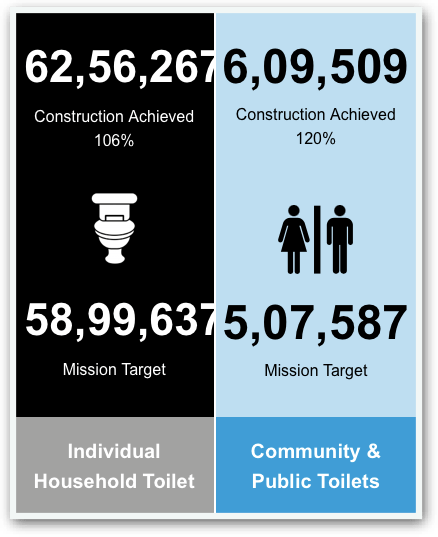
Source: https://sbm.gov.in/sbmdashboard/Default.aspx
2. Safe Drinking Water
Government of India launched a time-bound programme named Jal Jeevan Mission(programme in mission mode to provide drinking water to every rural household)on 15th August 2019 with a vision to provide Functional Household Tap Connection (FHTC) in every rural home by 2024. Since the inception of the programme, 4,45,99,205 (23.54%) more households have been provided with tap water connection in about two years time period. As on 11th July 2021, 7,69,62,043 (40.63%) households in rural area have a tap water connections, an increase from 3,23,62,838 (17.07%) at the beginning of the programme (See Graph 3). Similarly, 6,69,808 (64.98%) schools and 6,71,052 Anganwadi centres (59.45%) now have a tap water connection, which is a substantial increase since the beginning of the programme. (See here)
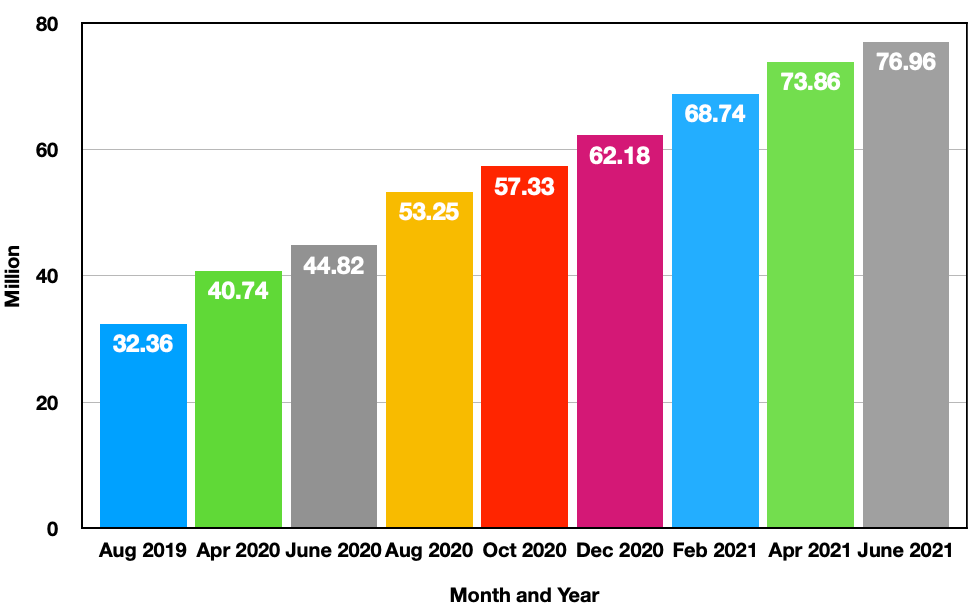
Source: https://ejalshakti.gov.in/jjmreport/JJMIndia.aspx
Conclusions
Apart from being a child’s right, access to safe drinking water and sanitation is crucial for the health and nutrition of children. Countries like India, which are facing high child undernutrition and mortality should include these interventions as basic and essential components of care. Without ensuring safe drink water and sanitation facilities, it will be impossible to achieve optimal health, growth and development of children. It is difficult to believe that these interventions did not get policy makers attention on an urgent basis during last so many decades. However, efforts made by the Government agencies in India during the last few years would ensure clean drinking water to the households, biggest beneficiary of which will be children. Similarly, access to in-house latrines will facilitate safe disposal of children’s excreta, reducing the chances of water and food contamination and therefore preventing the killer diseases like diarrhoea. This will contribute to healthy growth of children and make a dent in the high prevalence of undernutrition in the country.
“Water and Sanitation is one of the primary drivers of public health. I often refer to it as “Health 101”, which means that once we can secure access to clean water and to adequate sanitation facilities for all people, irrespective of the difference in their living conditions, a huge battle against all kinds of diseases will be won.”
Dr LEE Jong-wook, Director-General, World Health Organization (2004-06)
 The Sapling